
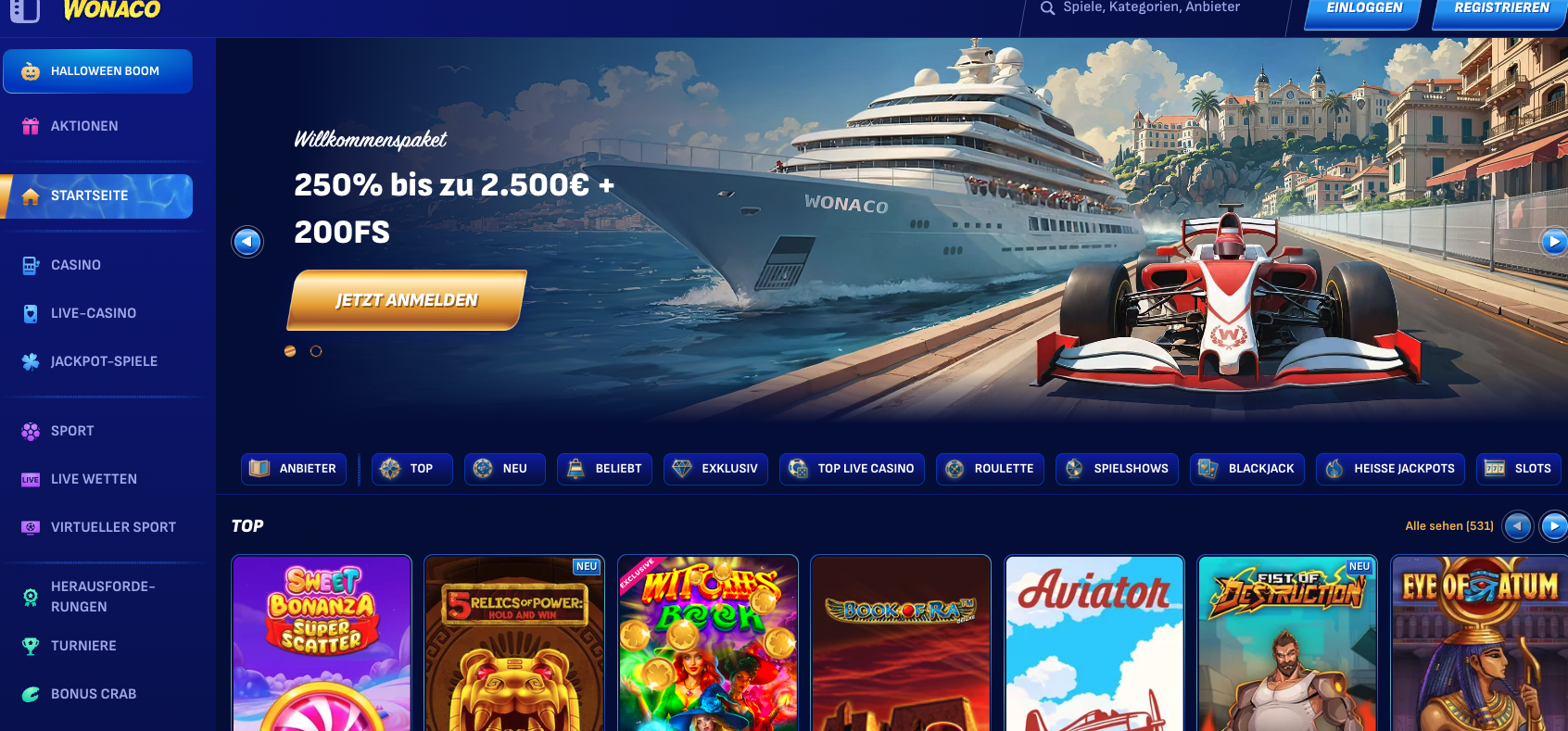
For players in Canada, a casino’s performance during internet disruptions is a critical yet often overlooked aspect of the user experience wonacocasinoo.eu. This analysis provides a comprehensive, hands-on evaluation of Wonaco Casino’s offline messaging system. The tester simulated various connectivity interruptions to thoroughly test how the platform manages game state, bet placement, and communication when a player’s connection falters. The results offer a transparent look at the technical dependability and user protection protocols in place for players across Canada, from major cities to remote regions where connectivity is less stable and dependable.
Evaluation to Market Norms in the Canada’s Market
In contrast with other casinos based in Canada, Wonaco’s offline handling is adequate and matches better-than-average practices. Some competitors employ more intrusive reconnection prompts or push notifications, while others provide a less transparent experience. Wonaco’s strength lies in its reliability; the client did not crash during tests, and recovery was consistently smooth. It may be without some showy features but offers reliably on the core commitment of protecting the player’s session and funds. Its approach is more cautious and engineering-focused than marketing-driven.
Notably, some rival platforms have adopted “offline modes” for certain games, a feature Wonaco currently does not have. However, these modes are often limited to free-play or practice versions. For real-money play, Wonaco’s method of suspending and reconciling is the industry norm. Where Wonaco shines is in the reliability of its recovery across its entire game library; no tested game failed to recover properly, which is not a certainty on all platforms where game provider integration can lead to inconsistent behavior during network stress.
Potential Weaknesses and Areas for Enhancement
While strong, the system has space for improvement. The grace period for live dealer reconnection appeared limited, potentially harming players with genuinely unstable internet. Furthermore, a more thorough “Connection History” log within the user account would offer greater transparency. Players could see timestamps of dropouts and automatic recoveries, promoting even greater trust. Introducing a localized offline help guide could also help users during extended outages.
Another area for potential development is more intelligent bandwidth management. During reconnection, the client could emphasize critical game state data over less essential graphical assets to speed up recovery. Additionally, while the mobile app reconnected rapidly, the browser version could benefit from a more persistent background reconnection algorithm to cut manual refresh needs. These are enhancements rather than fundamental flaws, but their implementation would boost the experience from reliable to exceptional.
Protection and Monetary Measures During Outage
A essential concern when connectivity drops is the security of payments and account integrity. Testing showed that Wonaco’s systems implement transaction idempotency, so that repeated API calls resulting from frantic user clicking during a dropout are detected and rejected by the server. This prevents double withdrawals or deposits. Moreover, the session encryption persisted across the reconnection process, with keys being reliably renegotiated without a full login, striking security with seamless recovery.
Financial transactions triggered in an outage, such as deposit confirmations, entered a pending state before connectivity was restored and the payment gateway could be checked for a final status. Crucially, funds were not added before a confirmed response was received, avoiding false balance updates. This intentional, verification-heavy approach to financial reconciliation, while possibly causing a slight delay, is the correct security posture and protects both the player and the casino from erroneous ledger entries.
Application vs. Browser Interface: Consistency Between Platforms
The assessment revealed a strong measure of consistency between Wonaco’s dedicated mobile app and the web browser experience on both phones and desktops. The mobile app exhibited a small edge in reconnection speed, probably due to better background process management. However, the core protocols—state recovery, messaging, and transaction safety—were uniform. This cohesive approach ensures Canadian players have a dependable experience irrespective of their chosen device or platform. The app’s ability to leverage native OS networking stacks contributed to its performance advantage.
Notably, the mobile browser experience on iOS and Android was practically as robust as the native app, a sign of well-implemented progressive web app (PWA) technologies. Push notifications for reconnection were absent on any platform, a feature some users might desire. The coherence in visual feedback and recovery procedure across all access points showcases a advanced, platform-agnostic development strategy that correctly treats offline handling as a core service layer, not a platform-specific afterthought.
Early Observations: The User Interface During Dropout
Upon a tested connection loss, the Wonaco interface acted within seconds. A subtle but easily noticeable banner emerged at the top of the screen, indicating “Connection lost. Attempting to reconnect…” The games themselves assumed a paused state where possible, rather than locking up or crashing. This instant visual feedback is essential for user reassurance, stopping frantic page refreshes or repeated clicks that could disrupt the recovery process. The banner’s design was coherent across platforms, using a neutral amber color that signaled caution without causing alarm.
The interface kept responsive for navigation to static pages like the help section during a dropout, though any live data updates were suspended. This is a sensible design choice, enabling users to seek information without the application becoming completely unresponsive. The reconnection process was accompanied with a subtle, animated icon, and upon success, a quick “Connection restored” message appeared. No audible alerts were initiated, which is better for discreet play. The overall UI behavior exhibited a considered design philosophy centered on maintaining user calm and control.
Communication and Reporting Protocols
In addition to the in-client banner, Wonaco’s system https://nypost.com/2025/04/22/us-news/online-gambling-on-the-rise-among-high-school-students/ for post-reconnection communication was evaluated. After a session with an disruption, a small notification icon sometimes appeared in the account section, detailing the incident. For more significant disruptions, such as those affecting bet settlement, the customer support team could reference a clear internal log of the event. Proactive email notifications were not sent for brief disconnections, which is sensible to avoid inbox clutter. However, the in-app notification system could be more uniformly applied; it did not trigger for every single minor reconnect event.

The support channel itself proved informed when contacted about test disruptions. Agents had access to detailed session logs showing the exact time of the dropout and the subsequent server-side resolution. This backend clarity is vital for efficiently resolving player disputes. While Wonaco does not offer a live chat transcript automatically sent after a dropout-induced support conversation, the agent provided a reference number and a clear outline of the resolved game state, which is an acceptable practice for post-incident communication.
How Offline Functionality Matters for Canadian Casino Sites
Canada’s vast geography creates unique connectivity issues, from rural areas with spotty service to urban network congestion. For real-money online casinos, a dropped connection mid-game can result in significant user anxiety regarding bet validity and potential winnings. A robust offline handling protocol is not a luxury but a necessity for responsible operation. It directly impacts player trust, financial security, and overall satisfaction, making it a key component of a casino’s technical infrastructure and customer-centric approach. The financial and emotional stakes of interrupted gameplay require systems that operate seamlessly without constant, perfect connectivity, a reality for many Canadian users.
Beyond player anxiety, regulatory expectations in provinces like Ontario highlight consumer protection, which implicitly includes safeguarding transactions during technical faults. A casino’s failure to gracefully handle disconnections can cause disputes, regulatory scrutiny, and erosion of brand reputation. Therefore, evaluating a platform like Wonaco involves scrutinizing its technical safeguards as a core component of its license to operate, not merely a convenient feature. This foundational understanding sets the subsequent hands-on testing of Wonaco’s specific implementation.
Conclusive Verdict on Dependability for Canadian Players
Wonaco Casino’s offline messaging and dropout handling systems are designed with a strong priority on data integrity and fair play. For Canadian players, this means a trustworthy guard against connectivity woes. The platform effectively mitigates the risk of financial loss or game state corruption during common internet interruptions. While not offering the most advanced user notifications, its core functionality is solid, making it a system-wise trustworthy choice for players across the country’s diverse network landscape. It executes its fundamental duty with quiet competence.
The system’s design philosophy plainly values correctness over flashiness. This produces a experience that may not dazzle but will consistently protect a player’s session and funds. For users in areas with intermittent service or those who regularly switch between Wi-Fi and mobile data, Wonaco provides a steady and secure foundation. The minor areas for improvement, such as enhanced transparency logs, do not lessen the overall effectiveness of a system that handles a essential, often invisible aspect of online gaming with professional diligence.
Detailed Look: How Wonaco Manages Interrupted Game Rounds
The processing of interrupted game rounds became the most critical test. For RNG-based games like slots, the outcome is determined at the moment the spin button is pressed. During a dropout, if the spin signal had been received by Wonaco’s servers, the game would continue to show the result upon reconnection. For live dealer games, the behavior was more nuanced. The system attempted to reclaim a player’s position at the table, with the round’s outcome being established by the live feed once re-established. This bifurcated approach is standard but requires flawless execution to maintain fairness.
Recovery for Slots and RNG Games
In all tests on slots and table RNG games, the platform successfully reconciled the game state. After reconnection, players were either presented with the result of their last spin/hand or, if the bet was not registered, their balance was unchanged. No “lost” wins or double-debited bets were observed. This suggests a reliable transaction verification system on Wonaco’s backend that favors data integrity over speed during network issues. The client uses a state synchronization protocol that reviews the last known server state upon re-establishing a link, solving any ambiguity before allowing further play.
Live Dealer Session Handling
Live dealer sessions posed a greater challenge. When connectivity dropped, the system reserved the player’s seat for a short grace period. Upon reconnecting within this window, the player could observe the concluded hand and any winnings or losses applied. If the disconnect was prolonged, the player was automatically folded or stood according to the game’s rules, with the result logged. This is a standard and fair approach to maintain game flow for other connected players. The grace period was measured to be approximately one full betting round, which is reasonable but may stress players with very slow connections.
The Methodology for Evaluating Wonaco’s System
The testing was carried out over a two-week period using a regulated environment to replicate real-world Canadian internet conditions. The reviewer purposely triggered connection drops at critical moments during live gameplay, slot spins, and while navigating the cashier. Both desktop and mobile platforms were evaluated. The primary metrics included message delivery success, state recovery accuracy, and the clearness of communication from Wonaco regarding interrupted sessions. A standardized checklist was used to ensure each test scenario was measured against the same criteria for consistency and objectivity.
Specific Test Scenarios Executed
Tests were created to cover high-stress transactional moments. These included interrupting a live dealer blackjack hand, cutting connectivity during the spin animation on a progressive slot, and stopping a withdrawal request submission. Each scenario was repeated multiple times to guarantee consistency in the platform’s response. The goal was to map the system’s behavior across the most financially and emotionally sensitive points of the user journey. Additional tests involved logging out and closing the app during a dropout to determine if recovery persisted.
Equipment and Connection Simulation
Network throttling software was used to simulate various Canadian ISP conditions, including high latency and complete packet loss. A secondary monitoring device tracked outgoing and incoming data to confirm the casino client’s reconnection attempts. This setup allowed for precise observation of how the Wonaco game client and backend servers handled the disrupted session, providing insights beyond surface-level user experience. Specific tools included WANem for network impairment and detailed browser developer console logs to monitor WebSocket and API call behavior during failures.